










SAP Business AI Solutions
AI built into the processes that run your business: an assistant you can ask, agents that carry the work across systems, and a governed foundation underneath.
AI built into the work, not bolted on.
SAP Business AI is SAP’s approach to putting AI inside the processes that run an enterprise. People ask in plain language, assistants and agents carry the work across SAP and non-SAP systems, and every answer is grounded in business data and process context rather than guesswork.
Covers
- Financial management
- Supply chain
- Spend management
- Human capital management
- Customer experience


01
A new human advantage
Routine workflows are automated so people can focus on the decisions that matter.
02
Performance that scales
Insights, agents and models work together across systems.
03
Agility without compromise
AI speed, with security and governance built in.
Four layers, working as one system.
From the question a person asks to the data and guardrails behind the answer. Point at a layer to lift it out of the stack.
One place where people put questions to the business and get fast, accurate answers, then turn those answers into action without switching tools.
- Connects the systems your business runs on, SAP and non-SAP
- Reliable autonomous workflows at enterprise scale
- Powered by enterprise-grade AI orchestration
From intent to outcome, with people in control.
Agents hand work to one another and use open protocols (MCP and A2A) to reach across systems, while governance runs the whole way through.
- 1
You state the intent
Ask a question or describe a goal in plain language, in the flow of your work.
- 2
An assistant coordinates
Using your role and process context, it works out which agents the job needs.
- 3
Agents execute
Specialised agents run the multistep work across SAP and non-SAP systems, handing off to one another.
- 4
Governance stays on
Every action is authorized, observable and traceable, with people in control of the decisions that matter.
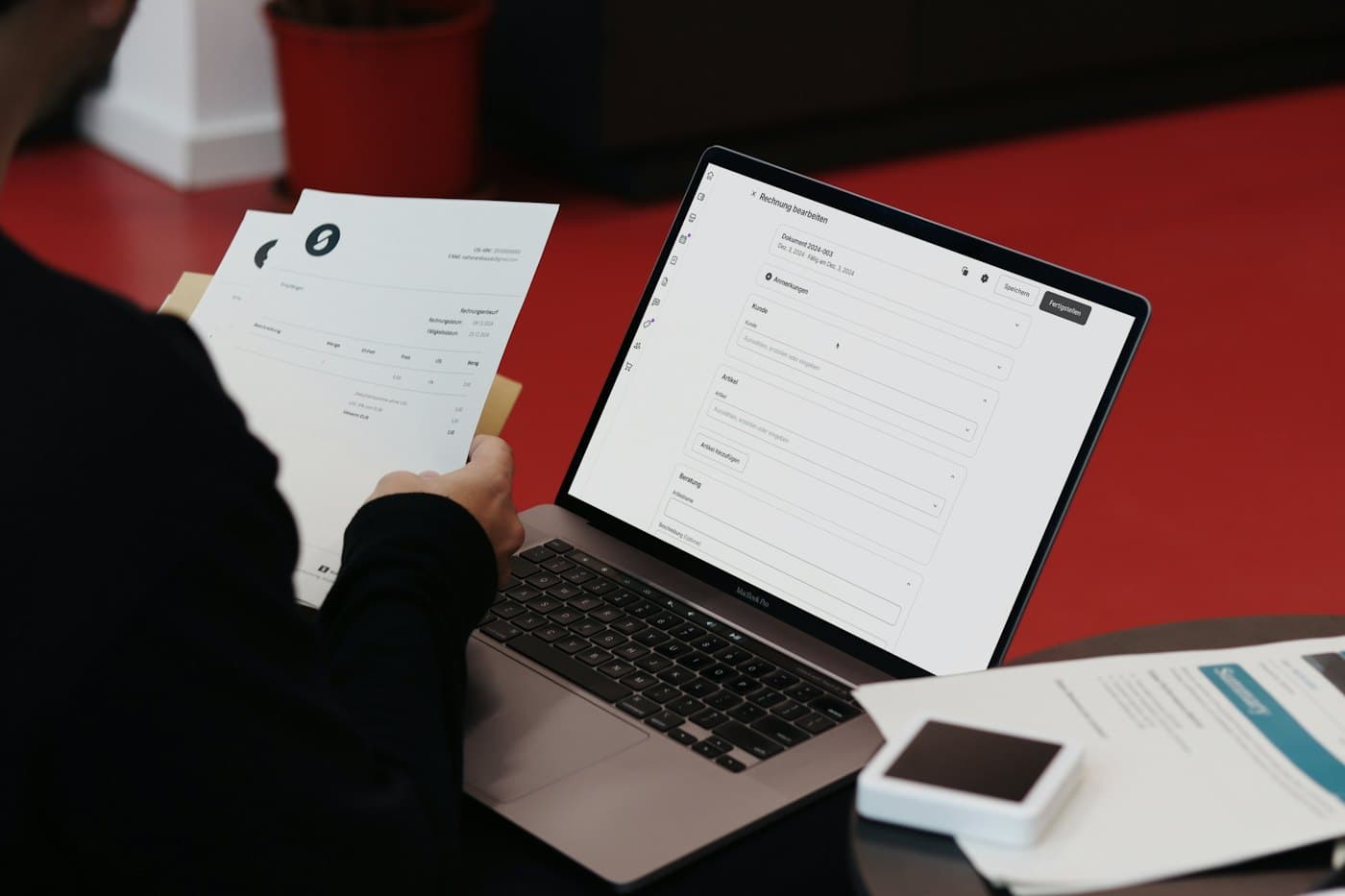
- Reads the invoice and contract details
- Flags discrepancies and mismatches proactively
- Advises the finance team on handling the credit memo
Illustrative. Based on SAP’s published description of the Dispute Resolution Agent, not a screenshot of the product.
Where agents are already at work.
Examples SAP publishes for each part of the business. Point at a function to see its headline agent and what else is possible there.







Finance & accounting
Analyses invoice and contract details, flags discrepancies up front instead of after the fact, and advises finance teams on how to handle the resulting credit memo.
Also in this area
- Late payment prediction, to forecast delays and reach out early
- Automatic payment matching, to cut days sales outstanding
- Financial close resolution, flagging anomalies before they snowball
What SAP and its customers report.
Up to
0%
less time on multistep workflows
SAP, on Joule Agents and Assistants
0%
payroll time cut at PostNL
SAP customer story: SuccessFactors Employee Central Payroll with Joule
0%
developer productivity gain at Bosch Digital
SAP customer story: SAP AI Core, ABAP Cloud and Joule for Developers

Bosch
Replaced rigid, rule-based workflows with a Joule Classification Agent that routes customer service cases in real time.
Mota-Engil
Removed manual goods receipt entry and sped up invoice clearance with a procure-to-pay agent built on SAP BTP, SAP Business Data Cloud and Joule.
Uniper
Used Joule Studio to turn complex procurement processes into simple, conversational actions.
Timken
Uses SuccessFactors and Joule to help employees set goals and prepare for career conversations.
HR Path Group
Automates HR tasks and speeds hiring and onboarding with SuccessFactors and Joule.
These figures are SAP’s, as published on its own pages, and describe the named customers’ results. Outcomes depend on your processes, data and rollout, so treat them as indicative rather than a promise.
Built for security, compliance and control.
SAP frames responsible AI on three pillars. Here is what it says sits behind each.
Built-in protections
- Encryption
- Tenant isolation
- Data masking
- Filtering
01
Ethics
Values that guide what gets built.
- Based on the 10 principles of the UNESCO Recommendation on the Ethics of AI
- Every AI use case goes through an ethics impact assessment and is classified by risk
- Coordinated by SAP's AI Ethics Office, with an internal steering committee and an external advisory panel
02
Security
Your data stays protected.
- Customer data is not shared with third-party LLM providers to train their models
- Encryption, tenant isolation, data masking and filtering
- Generative AI security tracks the OWASP Top 10
- Locally hosted AI can keep data and workflows in-region
03
Compliance
Aligned to the frameworks that matter.
- Governance framework draws on the EU AI Act, NIST AI RMF, ISO 42001 and more
- ISO/IEC 42001 certified for AI governance, covering Joule, SAP AI Core and SAP AI Launchpad
- Tier 3 alignment with the NIST Cybersecurity Framework (CSF v1.1)
SAP’s ten AI ethics principles
- 01Proportionality
- 02Safety and security
- 03Fairness and non-discrimination
- 04Sustainability
- 05Right to privacy and data protection
- 06Human oversight and determination
- 07Transparency and explainability
- 08Responsibility and accountability
- 09Awareness and literacy
- 10Multistakeholder and adaptive governance
ISO/IEC 42001
Certified for AI governance, covering SAP’s internal governance and key solutions including Joule, SAP AI Core and SAP AI Launchpad.
NIST CSF
Tier 3 alignment with the NIST Cybersecurity Framework (v1.1).
For organizations with regional requirements, SAP also offers AI hosted and managed in European data centers, designed to meet GDPR and align with the EU AI Act, and SAP Sovereign Cloud for full control over data and compliance.
A sensible path to your first agent.
SAP’s own guidance: start small, start with data, and bring people along.

- 1
Identify use cases that pay off
Look for work that is repetitive, error-prone and time-consuming, such as invoice processing or dispute resolution, or that is data-heavy, cross-functional or critical to compliance.
- 2
Check your data readiness
Agents depend on high-quality, harmonized data. Review real-time access, integration and governance, and aim for a single source of truth.
- 3
Pilot something manageable
Pick one contained use case and set clear, measurable success criteria such as time saved or errors reduced. Record a baseline and watch it closely.
- 4
Bring people in early
Involve business leaders, IT and the people who will use it from the start, and address change management, data privacy and job-impact concerns openly.
- 5
Build feedback loops
Agents improve as they learn from new data. Keep reviewing outcomes so the value lasts and informs the next use case.
Let’s talk about the outcome you’re trying to reach.
Tell us about the challenge you’re facing — we’ll help you design a practical path from where you are to where you need to be.
The Solmere Map is our shorthand for looking after the details nobody sees in SAP Business AI Solutions.